
Central New York Money Laundering Lawyer
Home » White Collar Crimes » Money Laundering
If you need an experienced Central New York money laundering lawyer, George F. Hildebrandt, Attorney At Law, provides aggressive criminal defense representation for individuals and businesses facing state and federal money laundering charges. Money laundering allegations involve serious criminal charges accusing a person of conducting financial transactions involving property represented to be proceeds of criminal conduct. These charges may also allege that the transactions were designed to conceal or disguise the nature, the location, the source, the ownership, or the control of property believed to represent proceeds of specified criminal conduct.
Contact the office for a free consultation, use the contact form, call the law firm directly at (315) 303-6533, or call toll-free 24/7 at (800) 672-3523 to discuss your money laundering case and learn how experienced defense representation protects your rights and fights to achieve the best possible outcome.

Criminal Defense For State and Federal Money Laundering Charges in New York
Money laundering prosecutions occur in both New York state courts under the NY Penal Law and federal courts under federal statutes, with each jurisdiction imposing severe penalties, including substantial prison time, fines, and asset forfeiture. New York State money laundering charges frequently connect to drug trafficking, enterprise corruption, tax fraud, public corruption, and other specified criminal conduct that generates proceeds requiring concealment.
Money Laundering Charges: NY Penal Law
New York Penal Law criminalizes money laundering in four degrees based on the total value of property involved in financial transactions on one or more occasions, with each degree carrying increasingly severe felony classifications and penalties. The statutes prohibit knowingly engaging in financial transactions involving property represented to be proceeds of criminal conduct, conducting transactions to promote the carrying on of specified criminal activity, or engaging in conduct designed to avoid transaction reporting requirements imposed by law.
Money laundering convictions require proof that the accused knew the property involved in such a financial transaction represented proceeds of criminal conduct and intended to promote criminal activity, conceal the nature or source of funds, or avoid legal reporting obligations. Prosecutors must establish that defendants engaged in conduct constituting a felony by demonstrating knowledge of the criminal source and intent to facilitate such felonies through financial transactions.
Money Laundering First Degree NY
First-degree money laundering under New York Penal Law applies when a person knowingly engages in financial transactions involving property represented to be proceeds of criminal conduct with a total value exceeding one million dollars. This most serious money laundering crime constitutes a Class B felony carrying up to 25 years imprisonment and substantial fines based on the value of the property involved. First-degree charges often involve large-scale drug trafficking operations, major financial fraud schemes, extensive public corruption cases, or sophisticated enterprise corruption where defendants exercise ownership or control of property believed to represent criminal proceeds.
Money Laundering Second Degree NY
Second-degree money laundering charges apply when financial transactions involving property represented as criminal proceeds exceed five hundred thousand dollars in total value. This offense constitutes a Class C felony under New York law, carrying penalties of up to 15 years imprisonment plus fines and asset forfeiture. Second-degree allegations frequently arise in connection with drug trafficking conspiracies, securities fraud, healthcare fraud, tax evasion schemes, and organized crime operations.
Money Laundering Third Degree NY
Third-degree money laundering involves financial transactions involving property represented to be criminal proceeds, with a total value exceeding one hundred thousand dollars. Classified as a Class D felony, third-degree money laundering carries up to 7 years imprisonment, along with fines and potential forfeiture. Third-degree charges commonly connect to mid-level drug sales, financial fraud, illegal gambling operations, and tax crimes.
Money Laundering Fourth Degree NY
Money laundering in the fourth degree applies when transactions involving property believed to represent criminal proceeds exceed fifty thousand dollars in total value on one or more occasions. This Class E felony carries up to 4 years imprisonment and represents the entry-level money laundering charge under New York law. Fourth-degree charges often arise from the sale of a controlled substance, stolen property sales, fraud schemes, and other criminal offenses that generate monetary instruments exceeding the threshold amount.
Federal Money Laundering Charges
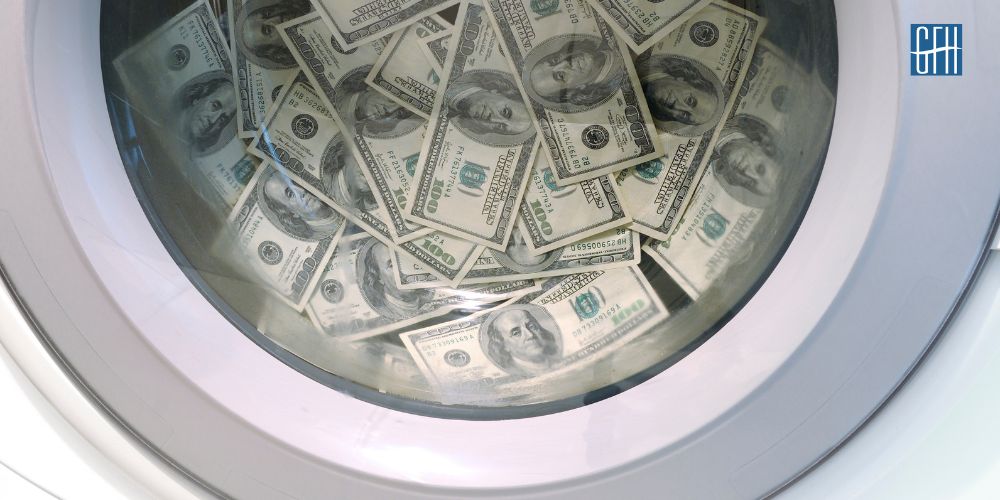
Federal money laundering statutes criminalize a broader range of conduct than New York state law, imposing severe penalties, including up to 20 years imprisonment per count, fines up to $500,000 or twice the amount laundered, and extensive asset forfeiture. A Syracuse, New York, federal criminal defense lawyer handles federal money laundering charges that frequently connect to drug trafficking, healthcare fraud, securities fraud, wire fraud, mail fraud, terrorism financing, violations of tax law, RICO violations, and public corruption cases.
18 U.S.C. § 1956: Money Laundering
Federal statute 18 U.S.C. § 1956 criminalizes conducting financial transactions involving proceeds of specified unlawful activity with the intent to promote criminal activity, knowing the transactions are designed to conceal or disguise the nature, the location, the source, the ownership, or the control of the proceeds, or knowing the transactions avoid transaction reporting requirements.
The statute applies to domestic financial transactions, international transportation on one or more occasions, monetary instruments representing criminal proceeds, and undercover sting operations where property is represented to be criminal proceeds. Violations carry up to 20 years imprisonment and fines, with enhanced penalties when money laundering involves terrorism financing. Prosecutors must prove transactions in fact involve proceeds from specified unlawful activity to secure convictions under this statute.
18 U.S.C. § 1957 Financial Transactions With Criminal Proceeds
Federal statute 18 U.S.C. § 1957 prohibits knowingly engaging in monetary transactions in criminally derived property valued at more than ten thousand dollars where the property is derived from specified unlawful activity. Unlike § 1956, this statute does not require proof of intent to conceal criminal proceeds or promote illegal activity; it only requires knowledge that the monetary transaction involved in such financial dealings included criminally derived property exceeding ten thousand dollars. Penalties include up to 10 years imprisonment and substantial fines.
Structuring Under 31 U.S.C. § 5324
Structuring charges under 31 U.S.C. § 5324 prohibit breaking up financial transactions into smaller amounts to evade Currency Transaction Report requirements that banks must file for a financial transaction or transactions exceeding ten thousand dollars. Federal law criminalizes structuring, whether or not the money involved represents criminal proceeds, making even legitimate funds subject to prosecution if transactions are designed to avoid any transaction reporting requirements. Financial institutions file Suspicious Activity Reports when detecting patterns suggesting structuring, triggering IRS criminal investigations, or FBI inquiries. Structural violations carry up to 5 years imprisonment and substantial fines.
Related Crimes in New York Money Laundering Cases

Money laundering charges rarely stand alone, typically accompanying underlying criminal conduct that generated the proceeds at issue in financial transactions. Prosecutors commonly charge money laundering alongside drug trafficking, financial fraud, tax evasion, public corruption, and RICO violations, with each additional charge carrying separate penalties. Understanding how money laundering connects to related offenses proves essential to developing comprehensive defense representation that addresses all accusations and challenges the prosecution’s overall case.
Drug Trafficking
Money laundering charges frequently arise from drug trafficking investigations where law enforcement traces criminal sale proceeds through financial institutions, real property purchases, vehicle acquisitions, and other such financial transactions designed to conceal the criminal source of funds.
Federal and New York prosecutors aggressively pursue money laundering allegations against drug traffickers, alleging that bank deposits, wire transfers, cash purchases, and business investments represent efforts to disguise the nature and source of narcotics proceeds. Central New York drug crime defense challenges government attempts to connect financial transactions to drug activity and attacks insufficient evidence of knowledge that the funds represented drug proceeds.
Tax Evasion and Fraud Offenses
Money laundering allegations commonly accompany tax evasion charges when individuals fail to report income from illegal activities or use financial transactions to conceal taxable proceeds from IRS scrutiny in violation of tax law. Mail fraud and wire fraud charges frequently combine with money laundering when financial fraud schemes involve the transmittal of funds through banks or interstate commerce.
Securities fraud, bank fraud, healthcare fraud, and other financial crimes generate proceeds that prosecutors allege defendants laundered through subsequent transactions. Central New York financial fraud defense challenges transaction analysis, attacks knowledge and intent elements, and demonstrates legitimate business purposes for financial activities.
Public Corruption
Public officials accused of accepting bribes, kickbacks, or other illegal payments often face money-laundering charges when prosecutors allege financial transactions designed to conceal the corrupt source of funds or to disguise ownership or control of property believed to have been obtained through abuse of public office.
Political corruption cases involve tracing campaign contributions, consulting payments, real estate transactions, and other financial dealings to establish that public officials laundered bribery proceeds. A New York corruption defense attorney challenges government evidence connecting financial transactions to corrupt conduct and attacks insufficient proof of knowledge and intent elements.
RICO
Money laundering serves as a predicate act under federal RICO statutes and New York enterprise corruption laws, allowing prosecutors to charge racketeering when a pattern of money laundering offenses demonstrates participation in a criminal enterprise. RICO prosecutions combine money laundering with drug trafficking, fraud, extortion, and other criminal conduct to establish an enterprise engaged in a pattern of racketeering activity. Enterprise corruption charges under New York law include money laundering as specified criminal conduct constituting felony allegations of participation in organized crime, and such crimes as drug distribution and financial fraud.
How Money Laundering Investigations Work in New York
Money laundering investigations typically begin when financial institutions file Suspicious Activity Report Triggers or Currency Transaction Reports that trigger scrutiny by federal and state law enforcement agencies. Banks must comply with Bank Secrecy Act requirements to monitor customer transactions, identify suspicious patterns suggesting money laundering or structuring, and report activity to FinCEN Investigations and other government authorities.
IRS Criminal Investigation pursues money laundering cases involving tax evasion, unreported income, and financial fraud, generating proceeds concealed through banking transactions. The FBI White Collar Crimes Unit investigates money laundering connected to fraud, public corruption, organized crime, and other federal offenses. Grand jury indictments for federal crimes subpoena financial records, bank statements, wire transfer documentation, and business accounts to provide prosecutors with evidence to trace monetary instruments and build money laundering cases.
Criminal Defense Strategies for Money Laundering Charges in New York

Defending against money laundering charges requires challenging multiple elements that prosecutors must prove beyond a reasonable doubt, including knowledge that the property represented criminal proceeds, intent to conceal or promote illegal activity, and a connection between financial transactions and specified unlawful conduct. Demonstrating a lack of knowledge that the funds represented the proceeds of criminal activity defeats charges requiring proof that the accused knew the property’s criminal source. Showing no intent to conceal or promote illegal activity undermines allegations that transactions were designed to disguise the nature, location, source, ownership, or control of criminal proceeds. Establishing legitimate sources of funds defeats the government’s claims that the money represented the proceeds of drug trafficking, fraud, or other criminal conduct.
Challenging the insufficient evidence of predicate offenses attacks the foundation of money laundering charges by demonstrating that prosecutors cannot prove that the underlying criminal activity generated the property at issue. Attorney Hildebrandt’s experience in challenging search and seizures may result in suppression of critical evidence obtained through Fourth Amendment violations in searches of bank records and financial accounts. Proving entrapment in undercover sting operations defeats charges based on government agents inducing defendants to engage in transactions involving property falsely represented to be criminal proceeds. Attacking transaction tracing challenges government evidence connecting specific funds to criminal activity and identifying alternative legitimate sources for such monetary instruments.
Money Laundering Penalties in New York
Federal Penalties for Money Laundering Convictions:
- Up to 20 Years Per Count
- Fines Up to $500,000 or Twice the Amount Laundered
- Asset Forfeiture
New York State Penalties for Money Laundering Convictions:
- First Degree: Up to 25 Years
- Second Degree: Up to 15 Years
- Third Degree: Up to 7 Years
- Fourth Degree: Up to 4 Years
- Restitution and Fines
Asset Forfeiture in New York Money Laundering Cases
Money laundering prosecutions typically include civil or criminal asset forfeiture seeking to seize property involved in financial transactions, property used to facilitate money laundering, or property representing proceeds of specified criminal conduct. Civil asset forfeiture proceedings allow government seizure of property based on probable cause connecting assets to criminal activity, without requiring a criminal conviction.
Criminal forfeiture occurs as part of sentencing following money laundering convictions, with courts ordering defendants to forfeit property used in or derived from money laundering offenses. Challenging forfeiture actions requires filing claims asserting constitutional violations in property seizures, insufficient evidence connecting assets to criminal conduct, or excessive fines under the Eighth Amendment. Third-party innocent owner defenses allow individuals whose property was seized to demonstrate they did not know the assets were involved in money laundering.
Contact a New York Money Laundering Defense Attorney

If you need an experienced New York money laundering lawyer, New York money laundering defense attorney George F. Hildebrandt provides aggressive criminal defense representation for individuals and businesses facing state and federal money laundering charges throughout Central New York.
Contact the office for a free consultation, use the contact form, call the law firm directly at (315) 303-6533, or call toll-free 24/7 at (800) 672-3523 to discuss your money laundering case and learn how experienced defense representation protects your rights and fights to achieve the best possible outcome.